Video Guided Soccer Drills: A Beginner-Friendly Starter Guide

You want soccer to be more than just running around a field, but the moment you try to practice at home, your mind goes blank. What drills should you do? For how long? Are you even doing them correctly? Video guided soccer drills answer those questions by showing, step by step, exactly what to do, how fast to move, and what good technique looks like, so you are never guessing alone in the backyard.
What video guided soccer drills actually are

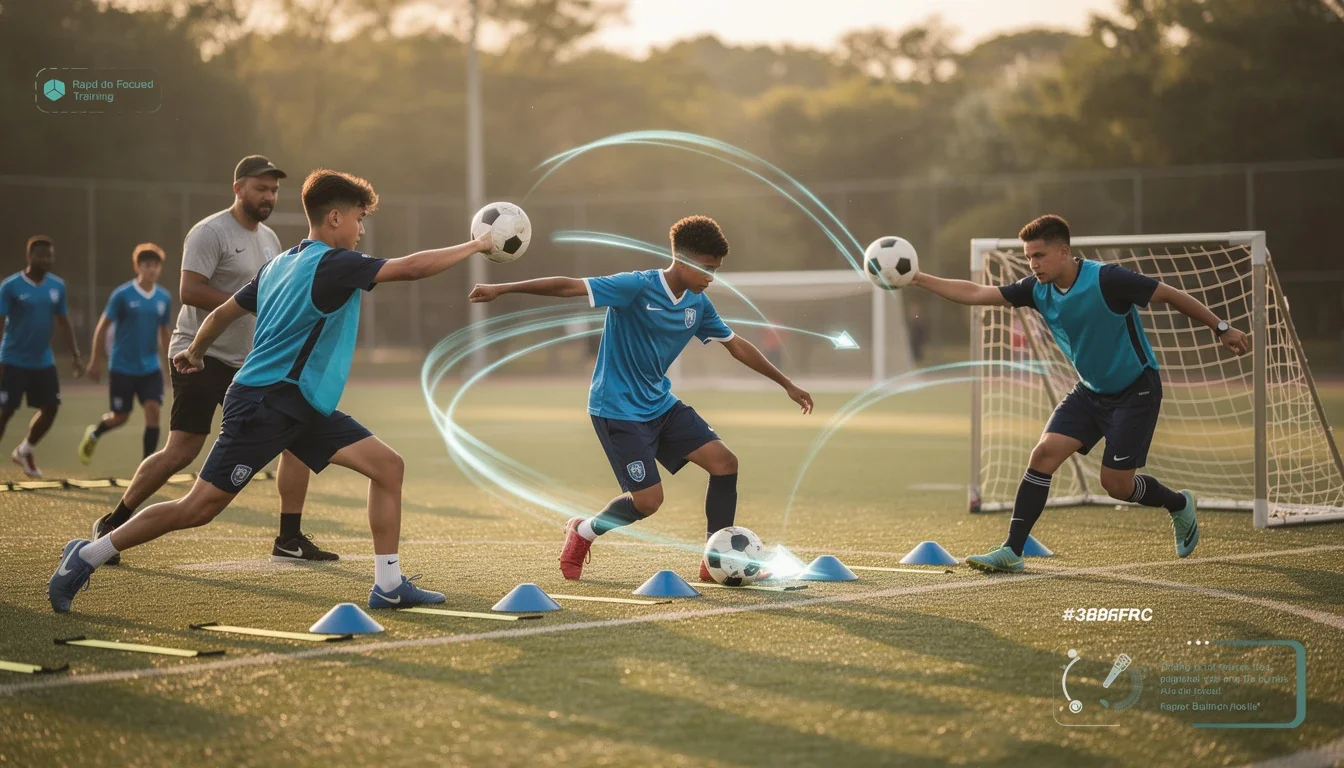
Think of video guided soccer drills as having a calm, patient coach living inside your phone. Instead of reading a list of exercises or trying to remember something from practice, you press play and copy what you see on screen. Each drill is a short, focused exercise shown on video, usually with slow motion, clear angles, and simple voice instructions so beginners can follow without confusion.
A soccer drill is just a repeated action designed to build one specific skill. That could be dribbling in tight spaces, passing with the inside of the foot, or striking the ball with the laces. With video guided drills, you see proper technique in real time: where the plant foot goes, how the body leans, even how long each touch lasts. For new players, that visual model matters far more than fancy coaching jargon.
Most modern apps, including Performix, organize drills into short sessions. A session might include three or four different drills, each lasting 30 to 60 seconds with breaks. You are not expected to memorize anything. You simply play the video, do the drill, and listen for the next cue.
Honestly, this is why I like video guided sessions for nervous beginners. There is no pressure to already know the names of moves or understand coaching terms. If the video says inside foot touch, it shows exactly which part of the foot that means, and you can pause or replay as much as you want without feeling judged.
**Pro tip: When starting with video guided soccer drills, watch the full drill once without moving, then replay and join in; it cuts frustration dramatically.
Why video guided soccer drills are worth your time
If you are a parent, you probably care about two things: is this safe and does it actually work. The short answer, based on research on motor learning and countless real teams, is yes. Players learn complex physical skills faster when they can see a clear model and then copy it with immediate repetition. That is exactly what video guided soccer drills are built around.
There is also a very practical benefit: structure. Most kids do not improve much from just shooting randomly at a goal for half an hour. Five focused minutes of tight dribbling, followed by five minutes of passing against a wall, repeated consistently, will usually beat a whole week of unplanned play. Video guided sessions give that structure automatically, which is a relief for busy families that cannot design training plans from scratch.
Then there is confidence. A shy 11 year old might not ask the coach to re demonstrate a movement at practice, but they will rewatch a drill on their phone ten times until it feels right. That quiet repetition builds genuine self belief. I have seen players go from avoiding the ball to demanding it in games after a few weeks of consistent home work.
You also get data if you use a training app. Performix, for example, tracks how often a player completes sessions and how many touches they get. That is not just vanity; seeing progress in numbers keeps kids engaged long after the first burst of motivation fades.
Five step path to start your first guided training

You do not need fancy gear or a huge field to start with video guided soccer drills. What you need is a small, safe space, a ball, and a realistic plan. I strongly prefer starting with very short sessions, even just 10 minutes, because the hardest part is not effort; it is consistency.
Step one is choosing a beginner friendly program that clearly labels skill levels. In my experience, parents should avoid any content that jumps straight into advanced tricks or constant high speed sprinting. Look for words like fundamentals, core skills, or level one, and ideally options designed specifically for kids or teens.
Step two is setting up the space. A flat section of backyard, driveway, or quiet park corner works. Remove obstacles, check for slippery spots, and mark a small grid with cones or water bottles. The annoying thing about outdoor training is how often bad surfaces cause unnecessary falls, so take two minutes to check.
Step three is picking one focus, such as basic dribbling. Open your chosen app, queue a short starter session, and watch the first drill fully. Then replay it while your player follows along. Encourage lots of short breaks for water and questions. Steps four and five are simply repeating the same small routine three or four times in a week and, only when it starts to feel easy, adding a new drill to the session. Slow progression beats random intensity almost every time.
Pro tip: schedule your sessions at a consistent time, like right after homework three days a week; when training becomes a habit instead of a decision, kids stick with it.
Avoiding common mistakes with video guided soccer drills
New players (and parents) tend to make the same few mistakes when starting with video guided soccer drills, and fixing them early saves a lot of frustration. The first is going too hard, too fast. If a drill on screen is done at full speed, beginners often feel they must match it immediately. They do not. Slowing the movement down and only gradually building speed is not cheating; it is how coordination actually develops.
The second mistake is copying the motion but not the details. For example, a player might imitate a passing drill but strike the ball with the toes instead of the inside of the foot. Over time that builds bad habits. This is why I encourage occasionally pausing the video to talk about exactly which part of the foot is used, how the hips face, and where the eyes should be.
Another issue is distraction. Phones are powerful but also full of temptations. If your child is training with an app, turn on do not disturb for the duration of the session. I have seen more sessions ruined by incoming messages than by bad weather.
Finally, some families expect instant results after a week and give up too quickly. Real improvement usually shows up after 3 to 4 weeks of consistent work. That might sound slow, but think in seasons, not days. Over a three month period, a player who steadily follows video guided soccer drills can easily accumulate thousands of extra touches on the ball, which almost always shows on the field.
Pro tip: record a short clip of your player doing a drill on day one and again after four weeks; that visual before and after is often far more motivating than any coach feedback.
Where to go next with structured video guided training
Once the basics feel comfortable, the question becomes what next. You can simply add slightly harder drills, such as moves to beat a defender or weak foot passing. Or, if your player loves a certain position, you can gradually introduce role specific work like finishing drills for strikers or footwork patterns for defenders.
At this stage, I like mixing video guided soccer drills with very short unstructured play. For example, you might do a 12 minute guided session and then give your child five minutes to invent their own move or challenge. That keeps training from feeling like homework. The Performix app, for instance, offers progressive levels and challenges that slot neatly into this style without you needing to design anything yourself.
If you are curious about how short sessions can still produce strong gains, you might enjoy reading Short Daily Soccer Training Sessions: A beginner friendly guide, which goes deeper into building a weekly routine. For families with players already showing real ambition, the ideas in Advanced Youth Soccer Drills At Home can later be combined with video guidance for more demanding work.
I am not 100 percent sure what pace will fit your family best, and that is completely fine. Some players thrive on daily 10 minute routines, others on three slightly longer sessions per week. The real goal is simple: keep the experience positive, safe, and consistent so the player wants to come back, video after video, season after season.