Advanced Youth Soccer Training Drills For Serious Player Development

If you are serious about soccer development, the typical once-or-twice-a-week team practice just will not cut it. Advanced youth soccer training drills for serious player development need to fill the gaps: sharper technique, faster decisions, and better conditioning than opponents who only show up on game day. The good news is you can build that edge with short, focused sessions instead of endless, unfocused workouts.
Technical detail that survives real game pressure

Most players think they have a decent first touch, right up until a defender is closing at full speed. The real test of an advanced youth soccer training drill for serious player development is whether it still looks clean when the player is tired, rushed, or bumped off balance. That is why I prefer drills that chain skills to gether instead of isolating them, even for younger players.
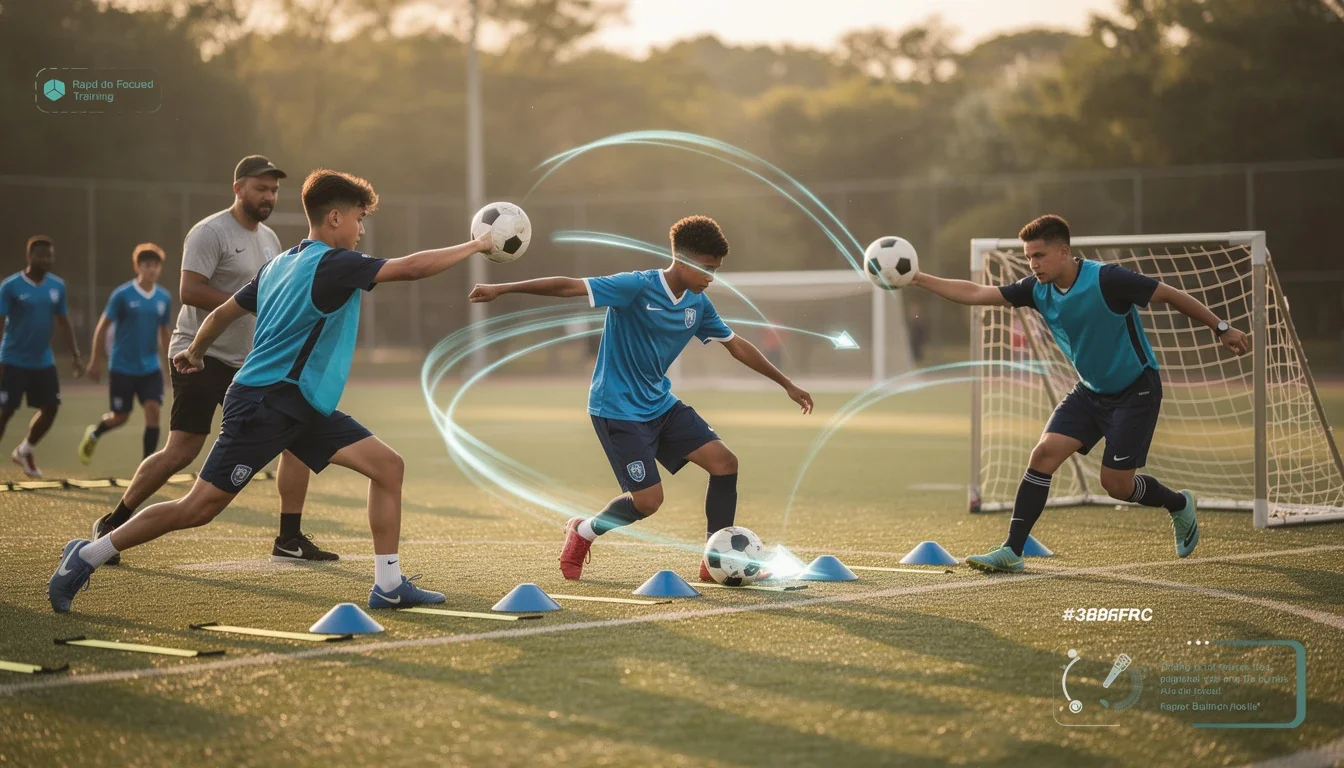
For example, a simple wall pass drill can become much more advanced if you add a first-touch target, a weak-foot requirement, and a quick turn into space after receiving. Suddenly it is not just about contacting the ball; it is about orienting the body, checking the shoulder, and scanning for the next action. This is exactly the jump players need as they move from recreational to high-level club and school soccer.
Another detail parents often miss: ball mastery should be messy and a little chaotic at advanced levels. You actually want the player to lose the ball sometimes during tight-cone dribbling or one-touch passing combinations, because that is the sign the drill is pushing the limit. If they never lose it, the drill is too easy and will not move the needle.
Whenever you build a home routine or use a training app, look for progressions that increase speed, reduce the number of touches allowed, or tighten the space. Those constraints force genuine technical growth and carry directly into match situations where mistakes are punished.
Pro tip: Track first-touch quality with a simple rule: if the second touch is a tackle instead of a pass, slow the drill down and rebuild the pattern at lower speed.
Position specific work to make strengths undeniable
Once basic technique is in place, generic drills are not enough. Advanced youth soccer training drills for serious player development should reflect how a player actually impacts matches in their position. A central midfielder needs repetition scanning over both shoulders before receiving; a winger needs hundreds of high-speed 1v1 repetitions in the channel; a center back needs repetition clearing aerial balls under pressure.
I am a big fan of designing micro-sessions built around a single decision that repeats a lot in games. For a striker, that might be checking away, spinning in behind, then finishing first time from different angles. For an outside back, it might be receiving on the half-turn near the sideline and playing forward through the midfield line. When players rehearse these patterns, their confidence skyrockets because game moments suddenly feel familiar.
Parents sometimes worry this will pigeonhole a child too early, and that is fair. The way around that is simple: keep one or two short position-specific blocks per week, and let the rest of the training stay general and playful. That way you build clear weapons without locking a 12 year old into a single role.
Serious players should also learn to review their own games, even just with a phone recording. Watching a 10 minute highlight of all their touches tends to reveal obvious themes, like constantly receiving with the wrong foot or avoiding shots from outside the box.
Speed, agility, and power that actually show up on match day

Raw speed matters, but field speed is more than just a 40 yard dash. In my experience, the most effective advanced youth soccer training drills for serious player development link footwork, short accelerations, and a decision at the end. Think of it as fitness with a brain attached. If a speed drill does not end with a pass, shot, or change of direction in response to a cue, you are leaving value on the table.
The annoying thing about many conditioning drills is that they look impressive while quietly teaching bad habits. Endless straight-line sprints with no ball can tighten hips and encourage lazy posture. Instead, I like short 5 to 10 second bursts with full rest, sharp cuts, and lots of directional changes that mimic real plays. You can still get players very fit this way, but you protect their touch and body mechanics.
For power, bodyweight strength and light resistance are usually enough until late high school. Squats, lunges, hip bridges, and single-leg balance work build the foundation for injury resistance and explosive first steps. If you push heavy lifting too early, you risk technique breakdown and nagging overuse injuries that quietly erode development.
A simple rule of thumb I use: if a drill leaves the player noticeably slower with the ball in the final minutes, it was either too long or too intense for that day. The goal is sharp speed that lasts, not exhausted stumbling by the last whistle.